 how-to
Plan a Multilingual Destination Wedding: 7 Steps
Table of Contents
- 1. Start With a Language Access Plan for Your Multilingual Wedding
- 2. Choose a Destination and Venue That Works for Every Guest
- 3. Set a Wedding Budget That Includes Translation and Interpretation
- 4. Build Your Guest List and Plan Destination Wedding Guest Communication
- 5. Plan a Multilingual Wedding Itinerary for a Multi-Day Celebration
- 6. Check Legal Requirements and Marriage Paperwork Early
- 7. Bring Bilingual Wedding Ceremony Ideas Into the Day Itself
- Frequently Asked Questions
Last Updated: October 12, 2026
1. Start With a Language Access Plan for Your Multilingual Wedding
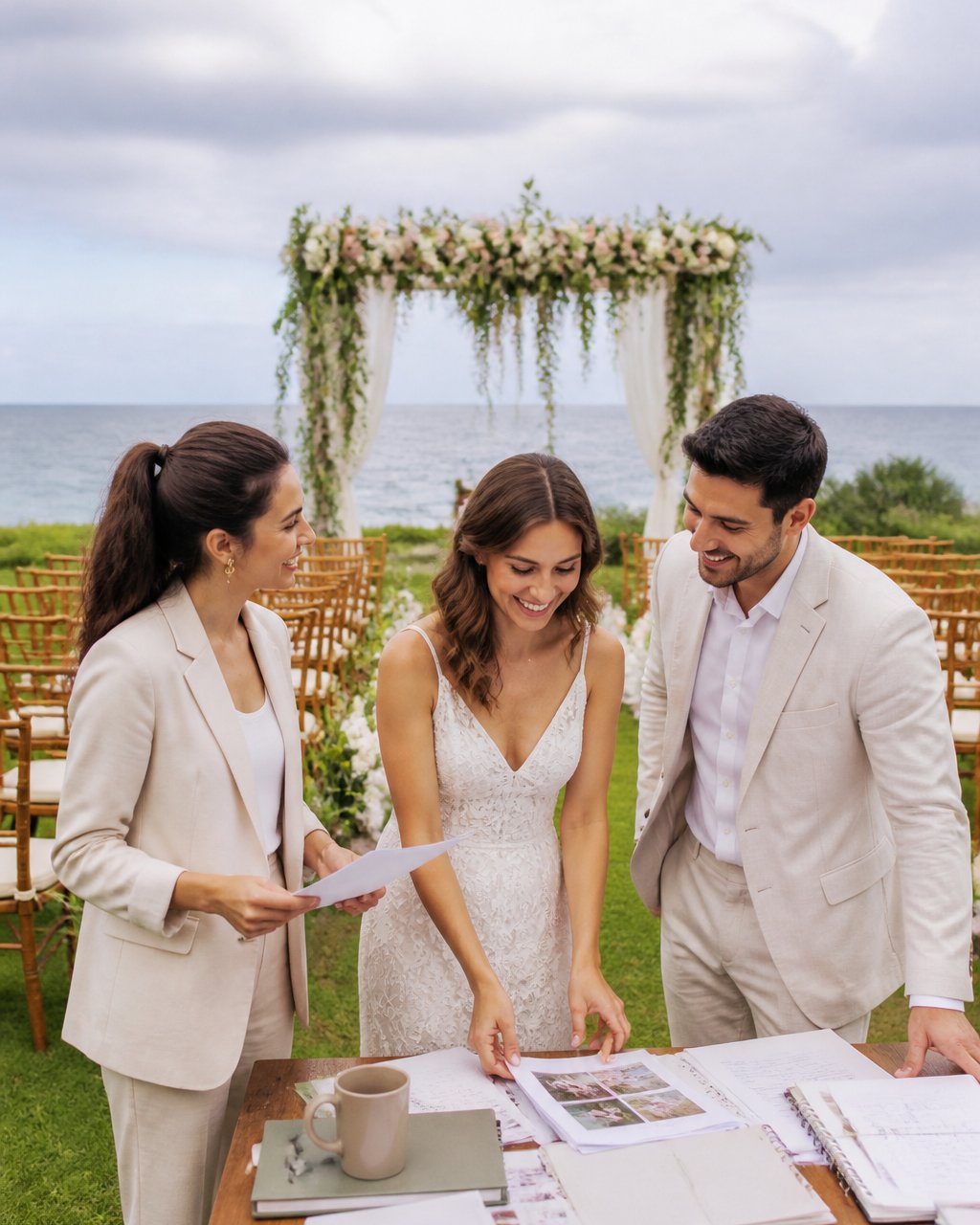
When you plan a multilingual destination wedding, a language access plan is a simple document that lists who is coming, what languages they speak, and how every piece of information will reach them. If you plan a multilingual destination wedding without one, small details slip through: a welcome note only half the guests can read, a ceremony nobody fully follows.
Start your plan with three columns:
- Guest name and the language they read most comfortably
- What they need: invitations, schedules, menus, vows, directions
- Who translates it: you, a bilingual relative, or a paid service
Then decide your two working languages. One is the ceremony language. The other is the language most of your guests share. Everything else gets translated from those two.
2. Choose a Destination and Venue That Works for Every Guest
The best destination is the one your guests can actually reach without a translator by their side. That usually means an international airport with direct flights, a venue with bilingual staff, and clear transport from hotel to ceremony.
Ask venues three questions before you book:
- Do you have staff who speak our guests' main languages?
- Can you provide menus, signage, and programs in more than one language?
- What is the backup plan if a vendor cancels?
A venue that says yes to all three saves you weeks of coordination later. One that hesitates will cost you time you don't have.
Also check the local marriage rules before you fall in love with a location. Some countries require a civil ceremony on local soil, and some ask for documents translated by an approved translator. Confirm this with the local embassy or consulate early, because paperwork timelines drive everything else.
3. Set a Wedding Budget That Includes Translation and Interpretation
Most couples forget to budget for language at all, then scramble when quotes arrive. Build translation and interpretation into your budget from day one, alongside venue, catering, and travel.
Your language costs usually fall into four buckets:
| Service | What It Covers | When to Book |
|---|---|---|
| Document translation | Marriage paperwork, contracts | 6-9 months out |
| Guest materials | Invitations, websites, signage | 4-6 months out |
| Live interpretation | Ceremony, speeches, welcome dinner | 3-4 months out |
| On-the-day support | Bilingual MC, printed programs | 2 months out |
Prices vary by language, word count, and how close you are to the date. Get quotes early, and ask whether rush fees apply. For a full breakdown of what each service involves, the Australian Institute of Interpreters and Translators explains how professional translation and interpreting differ, which helps you pick the right service for each task.
4. Build Your Guest List and Plan Destination Wedding Guest Communication
Destination wedding guest communication works best when it runs through one hub that every guest can open, in their own language, without downloading anything. Set that up before you send a single save-the-date.
Start with a simple guest list tracker:
- Household name and number of seats
- Language preference
- Travel dates and flight details
- Dietary needs and accessibility requirements
- RSVP status
Then pick one place to publish everything. A guest hub beats a group chat every time, because information stays findable instead of scrolling away.
Set Up Wedding Website Translation
Wedding website translation should be automatic, not a manual copy-paste job for every update. When you change the schedule, every language version should change with it.
Vows Afar guest hubs support ten languages with automatic translation, so welcomes, schedules, and FAQs update for everyone at once. Guests just click a link. No app, no login headaches for your grandparents.
Draft Invitations, RSVPs and Bilingual Signage
A bilingual wedding lives or dies on its small print. Keep invitations to one clear page per language, with the RSVP deadline in bold on both versions.
For signage, use short phrases and simple symbols:
- Welcome / Bienvenidos / 歡迎
- Ceremony this way, with an arrow
- Dinner at 7pm, with a clock icon
Short text translates cleanly. Long poetic sentences do not.
5. Plan a Multilingual Wedding Itinerary for a Multi-Day Celebration
A multilingual wedding itinerary turns a three-day event into something guests can follow on their own. Give every guest a day-by-day schedule in their language, with times, locations, dress codes, and transport details.
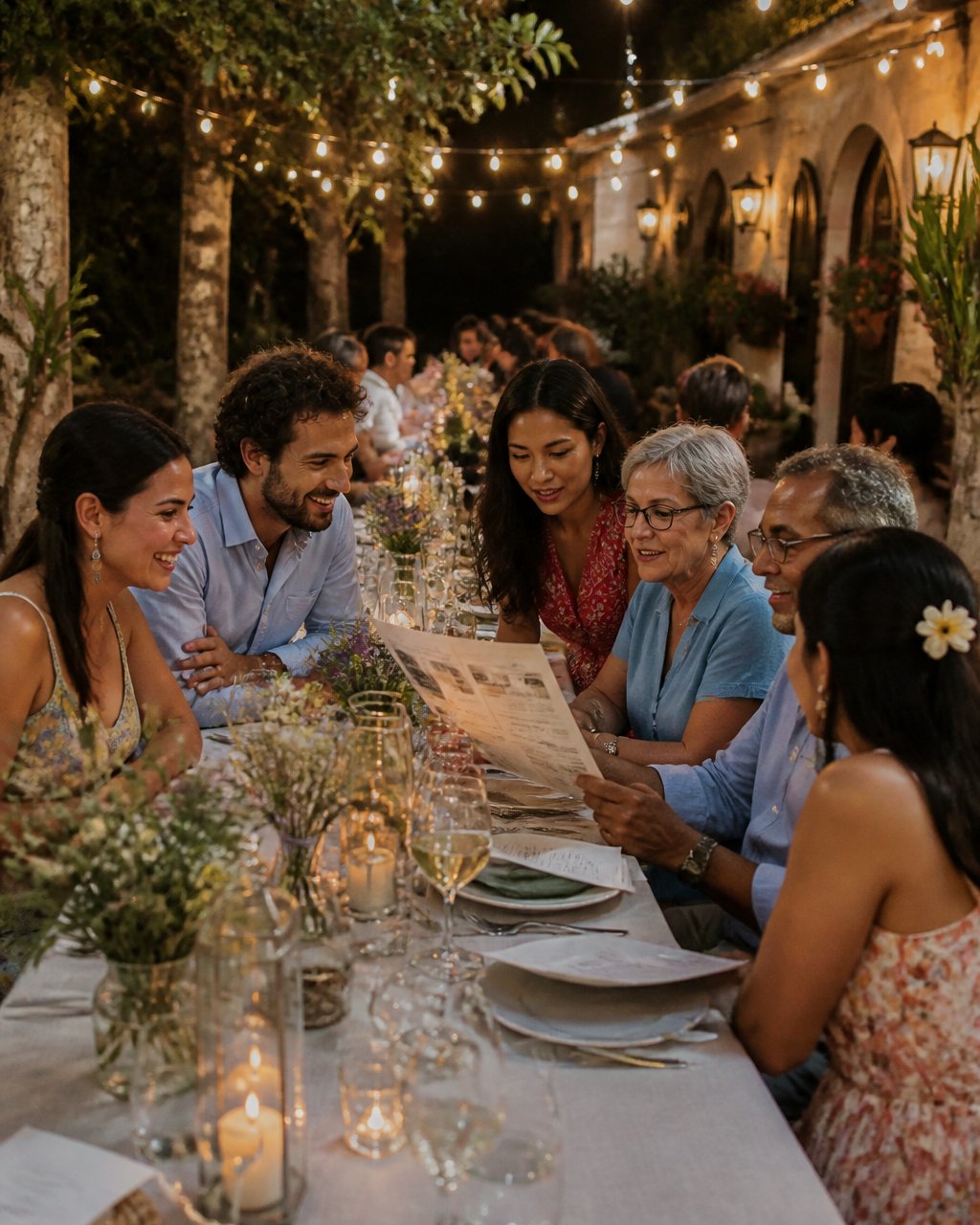
Build the itinerary in blocks:
- Day one: welcome event, casual, with a short greeting in each main language
- Day two: ceremony and reception, with printed programs in two languages
- Day three: farewell brunch, no formalities, just goodbyes
Add a "who to ask" line at the bottom of each day. One bilingual contact per day solves most problems before they grow.
6. Check Legal Requirements and Marriage Paperwork Early
Marriage paperwork is the part of a destination wedding that runs on someone else's clock. Start it the moment you pick a country.
Most couples need:
- Passports valid well beyond the wedding date
- Birth certificates, often translated and certified
- Statutory declarations or single-status certificates
- An in-person appointment at the local registry or embassy
Rules differ by country, and some require documents to be translated by an approved translator before they're accepted. Check the requirements with the embassy or consulate for your destination, and ask which translation credentials they accept. Smartraveller's guidance on getting married overseas is a good starting point for what to arrange before you travel.
Book your translation early. A certified translation can take weeks, and a missed deadline can push your ceremony date.
7. Bring Bilingual Wedding Ceremony Ideas Into the Day Itself
Bilingual wedding ceremony ideas work best when they're woven through the whole day, not bolted on at the last minute. The goal is simple: no guest sits through a moment they can't follow.
Try these:
- Dual-language vows: say each vow in one language, then the other
- A bilingual MC who moves between languages naturally
- Printed programs with the ceremony script side by side
- Readings in different languages, with a short printed summary
- Fusion menu cards that name each dish in both languages
Music and speeches deserve the same care. Ask speakers to keep jokes short and universal, and give the interpreter a copy of every speech a week ahead. A prepared interpreter sounds calm. An unprepared one sounds lost.
Planning a multilingual destination wedding asks a lot of you. You're juggling vendors, currencies, time zones, and the small worry that someone you love will feel left out. That last part is the one that matters most, and it's the one we built Vows Afar to solve.
Our platform keeps your vendors, guests, finances, and ceremony plans in one calm dashboard. Guest hubs translate automatically across ten languages, so every couple's family reads the same schedule in their own words. Guests need no app, just a link. And planners can run multiple couples from a single dashboard with a client-facing hub.
Start planning with Vows Afar, and let every guest feel at home from the first save-the-date to the last dance.
Frequently Asked Questions
How do you plan a multilingual destination wedding without overwhelming yourselves?
Treat language as a planning track, not an afterthought. In the first month, list every language your guests speak and decide what needs translating: invitations, your wedding website, the itinerary, signage and the ceremony itself. Then assign each item to a phase of your timeline, the same way you would with catering or flowers. A multilingual wedding becomes manageable when translation sits inside your existing checklist rather than running alongside it.
Should wedding invitations and websites be translated?
Translate anything a guest must act on. Invitations, RSVP instructions, travel and accommodation details, and your wedding website should all appear in each guest's language, because these drive bookings and replies. Decorative items can stay simpler. For website translation, automated tools handle most of the work, but ask a native speaker to check names, dates and venue addresses, since those are the details guests rely on most.
How can you make a wedding ceremony accessible in multiple languages?
Use a bilingual officiant or a professional interpreter, and print programs in each guest language so people can follow along. Keep vows and speeches short, and brief your celebrant on pacing so interpretation has room. Bilingual signage at the ceremony space helps guests find seating, the bathroom and the reception. If several languages are in play, choose two for the formal parts and let the rest of the day carry the meaning through music, food and shared traditions.
What should a multilingual wedding itinerary include?
Cover every event across the full multi-day celebration, with times, locations, dress codes, transport options and meal notes. Translate it into each guest language and include local emergency contacts and a simple phrase list. A digital guest hub works well here, since you can update it in real time if plans shift. Print a small number of copies for older guests who prefer paper.